
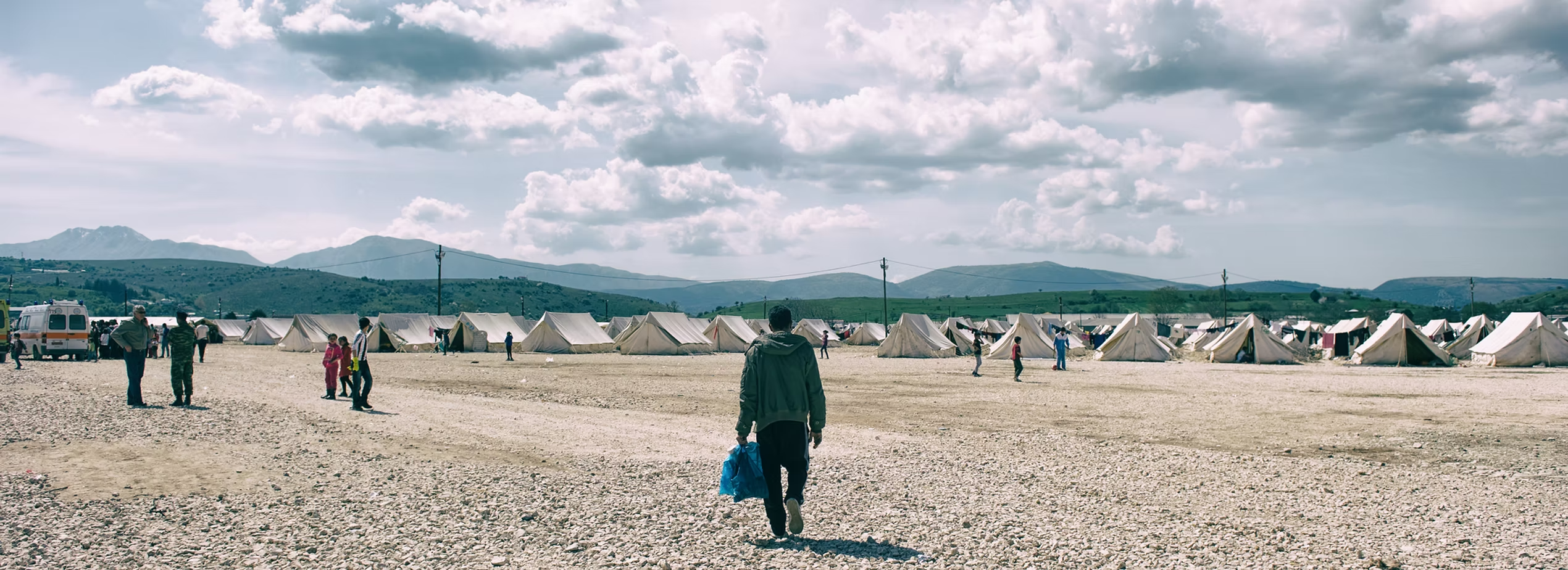
Sudan Emergency Response
An integrated emergency response supporting displaced and vulnerable communities across Khartoum, White Nile and Northern State.
A coordinated response to displacement-related need
Osman Consulting is delivering an integrated emergency response addressing displacement-related humanitarian needs across Khartoum, White Nile and Northern State. The response brings together Health, WASH, water infrastructure and Shelter interventions into a single, coordinated programme.
Implementation locations were informed by rapid assessment findings and identified needs across the target states, so that the mix of interventions at each site reflects the needs actually observed there.
Prolonged displacement is straining essential services
Sustained displacement across Sudan has placed growing pressure on health, water and sanitation systems, and damaged shelter conditions for large numbers of families. Needs differ significantly from state to state.
Urban displacement and sustained pressure on damaged utilities, straining health, water and sanitation systems already stretched by large displaced populations.
Congested displacement sites with significant WASH-related risks, where overcrowding increases exposure to waterborne disease and sanitation gaps.
Transit displacement, acute water scarcity, and underserved camps and gathering sites along key movement corridors.
An integrated emergency response
Health
Mobile clinics and support to static facilities.
WASH
Safe water, sanitation and hygiene promotion.
Water Infrastructure
New solar-powered boreholes and rehabilitated hand pumps.
Shelter
Emergency shelter kits and repairs.
31 selected implementation sites
Our response focuses on displacement-affected communities and sites across Khartoum, White Nile and Northern State. Each site was selected through rapid assessment; different locations receive different combinations of support depending on local need. Select a marker to see what each location is receiving.
Health
The health response combines mobile clinics with support to static facilities, extending essential healthcare to communities with limited or interrupted access. Services include outpatient consultations, maternal and reproductive health, child health, vaccination, emergency case management, and community health awareness, delivered alongside training for local health workers.
WASH
The WASH response improves access to safe water, sanitation and hygiene through new and rehabilitated water points, gender-segregated latrines and handwashing facilities, hygiene kit distribution, and hygiene promotion. Community-led WASH committees are established and trained to support day-to-day operation and maintenance.
Water Infrastructure
32 solar-powered boreholes are being drilled, fitted with solar pumping systems, storage tanks and distribution points, and commissioned across the target states, providing a sustainable, low-running-cost source of safe water for displacement-affected communities. Sites are identified through hydrogeological assessment and technical siting studies.
Shelter
The shelter response distributes emergency shelter kits and supports repair and reinforcement of damaged and temporary shelters, with an emphasis on safety, privacy and dignity for displacement-affected families. Assistance is prioritised for the most vulnerable households identified through the response.
An evidence-led, accountable response
Rapid assessment identifies need and informs site selection.
Coordinated delivery across Health, WASH and Shelter.
Routine field verification and progress tracking.
Results tracking and reporting support accountability.
The programme uses results tracking, routine implementation monitoring, verification and structured reporting to support transparency and accountability to donors, partners and the communities served.
May 2026 → April 2027
Built for continuity beyond the project
Community-level participation sits at the centre of the WASH response: local committees are formed and trained to support operation and maintenance of water infrastructure, so services continue to function beyond the life of the project. Capacity building for health workers and WASH committees is designed to leave a lasting local skill base, and handover planning is built into the programme from the outset.
What the response aims to achieve
Targets include improved access to essential health services for displacement-affected populations across all three states.
Planned response includes improved access to safe water and sanitation, and reduced exposure to WASH-related risks.
Expected to support improved emergency shelter conditions, with an emphasis on safety, privacy and dignity.
Targets include strengthened community-level participation, through WASH committees and capacity building for sustainability.